

Journals >Advanced Photonics Nexus

Research Articles
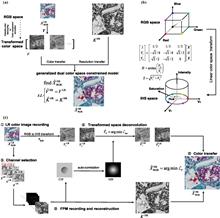
Yanqi Chen, Jiurun Chen, Zhiping Wang, Yuting Gao... and An Pan|Show fewer author(s)
Advanced Photonics Nexus
- Mar. 21, 2025
- Vol. 4, Issue 2 (2025)
Research Articles
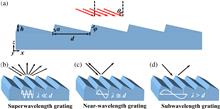
Zhisen Huang, Qian Zhang, Qiang Song, Shanwen Zhang, and Changhe Zhou
Advanced Photonics Nexus
- Mar. 19, 2025
- Vol. 4, Issue 3 (2025)
Research Articles
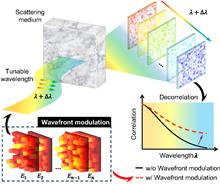
Daixuan Wu, Jinye Du, Yuecheng Shen, Jiawei Luo... and Shian Zhang|Show fewer author(s)
Advanced Photonics Nexus
- Mar. 17, 2025
- Vol. 4, Issue 2 (2025)
Research Articles
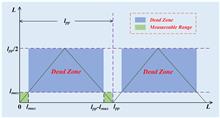
Jiawen Zhi, Mingyang Xu, Yang Liu, Mengyu Wang... and Hanzhong Wu|Show fewer author(s)
Advanced Photonics Nexus
- Mar. 12, 2025
- Vol. 4, Issue 2 (2025)
Research Articles
Zhitao Zhang, Xiaobo Heng, Junwu Wang, Sheng Chen... and Hongwen Xuan|Show fewer author(s)
Advanced Photonics Nexus
- Mar. 10, 2025
- Vol. 4, Issue 2 (2025)

APN Highlights

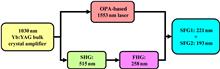
Deep ultraviolet (DUV) lasers, known for their high photon energy and short wavelengths, are essential in various fields such as semiconductor lithography, high-resolution spectroscopy, precision material processing, and quantum technology. These lasers offer increased coherence and reduced power...
Advanced Photonics Nexus
- Mar. 25, 2025
- Vol. 4, Issue 2 (2025)
APN Highlights
Quantum information processing is a field that relies on the entanglement of multiple photons to process vast amounts of information. However, creating multiphoton entanglement is a challenging task. Traditional methods either use quantum nonlinear optical processes, which are inefficient for large...
Advanced Photonics Nexus
- Mar. 18, 2025
- Vol. 4, Issue 2 (2025)
APN Highlights
Traditional imaging systems are bidirectional—if I can see you, you can also see me. Researchers at UCLA recently developed a new type of imaging technology that could revolutionize how we capture and process visual information: unidirectional imaging. By allowing images to be formed in only one...
Advanced Photonics Nexus
- Nov. 14, 2024
- Vol. 3, Issue 6 (2024)
Special Issue
Photonics provides AI not only
with the tools to sense and
communicate more effectively,
but also with the instruments
to accelerate the inference
speed. Moreover, AI offers
photonics the intelligence
to process, analyze and
interpret the sensed data,
but also to solve a wide
class of inverse...
Advanced Photonics Nexus
- Oct. 24, 2024
- Vol. 3, Issue 5 (2024)
Top Downloads
- Advanced Photonics Nexus
- Vol. 3, Issue 6, 066004 (2024)


- Advanced Photonics Nexus
- Vol. 3, Issue 6, 066003 (2024)
- Advanced Photonics Nexus
- Vol. 3, Issue 5, 056008 (2024)
- Advanced Photonics Nexus
- Vol. 3, Issue 4, 044001 (2024)
- Advanced Photonics Nexus
- Vol. 3, Issue 4, 046001 (2024)
- Advanced Photonics Nexus
- Vol. 3, Issue 4, 046002 (2024)
Call for Papers
Editor (s): Aleksandr Krasnok, Xiulai Xu


© Copyright 2018-2021 | Chinese Laser Press. All Rights Reserved 沪ICP备15018463号-20